

Next Generation Multiplatform Ocean Observing Technologies for
Research
Infrastructures
GEORGE is a Horizon Europe-funded project that develops
novel
technologies to improve ocean observations. The technologies developed
will represent the next level
in systematic long-term autonomous ocean
observations.
Novel technologies
Operational models for next-generation, high-precision sensors and platform technology for monitoring the ocean carbon system. Simple and energy-efficient, ready for the market.
Integrated ocean data
Fully integrated carbon observing systems across European marine research infrastructures, enabling better data to support science and decision-making.
Online training platform
Easy-to-use online training platform, offering training for technical staff to enable them to operate seamlessly across research infrastructures.

GEORGE brings together 28 leading partners from academia and industry alike, including three research infrastructures: EMSO ERIC, Euro-Argo ERIC and ICOS ERIC. Together these three ERICs cover the whole expanse of European marine waters.


For scientists
The new sensor and platform technologies developed by GEORGE can dramatically enhance the coverage, continuity and spatiotemporal resolution of marine observations. The new sensors are able to reach parts of the ocean that are currently inaccessible, such as polar areas, the deep sea and areas outside of commercial shipping routes. GEORGE will also enable scientists and research technicians to test the new instruments and take part in online training.


For industry
GEORGE is a powerful collaboration of academic and industry partners. The project's expert team develops sensor technology that can be integrated into floats, moorings and ships and used for high-precision, accurate measurements of ocean carbon systems. The goal is to develop five new sensors past the technology readiness level to be commercially produced.


For policy makers
GEORGE aims to provide policymakers with high-quality and reliable scientific data on the ocean’s condition. This data will help them make quick and informed decisions on how to adapt to climate change and reduce its impacts. The project will also enhance the competitiveness of European industries that produce and supply ocean observation equipment and technology.
News & Events
-

The 3rd GEORGE annual meeting focused on data and upcoming demo missions
The GEORGE consortium gathered in at the UPC Universitat Politècnica de Catalunya campus in Vilanova i la Geltrú, Spain, on 11-13 November 2025, for its three-day annual meeting, bringing together partners from across Europe to review progress and plan the final phase of the project. With new sensor deployments, data management, and upcoming field missions
-
GEORGE at EGU 2026
GEORGE will be co-organising a session at EGU 2026 in cooperation with the ENVRINNOV project. This dedicated session at EGU 2026 will focus on innovation across environmental domains – atmospheric, marine, terrestrial, and solid earth sciences. It will cover topics on the role of emerging technologies and service-oriented approaches in shaping the future of environmental monitoring.
-

New progress in acoustic sensor deployment – contributions from GEORGE and TRICUSO projects
Acoustic sensors are valuable tools for observing wind and rain at sea, two key drivers of exchanges between the ocean and atmosphere. While passive acoustic methods have been used from moored and mobile platforms, their integration on autonomous profiling floats has been limited. Recent work by several partners within the GEORGE and TRICUSO projects has
-
GEORGE featured as CORDIS “Project of the Month”
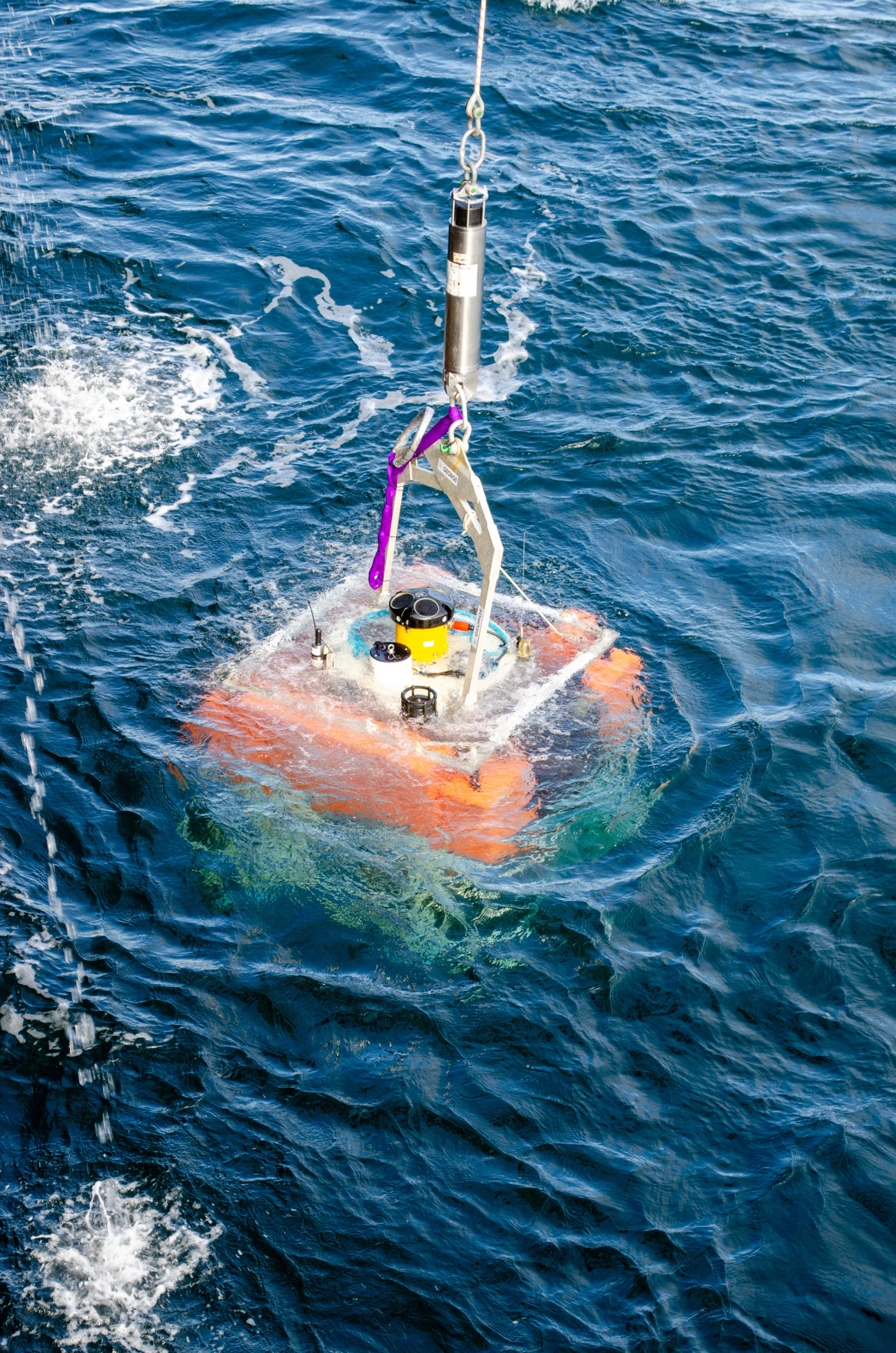
GEORGE has been highlighted by the European Commission’s CORDIS platform as its latest Project of the Month. This recognition places GEORGE among a select group of EU-funded initiatives showcased for their scientific relevance, innovation, and potential impact. CORDIS, the Community Research and Development Information Service, is the Commission’s central hub for communicating research results from